Civic Trust
  • Home
  • About Us
    • What we do
    • Meet the Team
    • Save the Date
    • Newsletters
    • HIstory of Timaru Civic Trust
  • Featured Articles
  • Heritage & History
    • Heritage NZ Listed Category 1
    • Awards & Grants
  • Get involved
    • Become a member
    • Make a donation chasing coin
  • Street Art
  • Blog
  • Blue Plaques
  • Contact
    • Links
    • Facebook Page
  • Ho
We have something remarkable here in South Canterbury...
​Our streets are lined by buildings that give the town beauty and identity. Behind the façades are stories of ambition, craftsmanship, community, and change. These stories help us look again at the buildings we go past, and the people and effort they represent.

As well as reading our Saturday columns in the Timaru Herald, you can view our blogs here.  Thank you to our volunteers who research and write these, to help keep our local built heritage stories alive, accessible, and even more valued.


​
Picture

The gates that intro­duce Aigan­tighe

16/5/2026

0 Comments

 
Picture
By Roselyn Fauth

​Next time you are near 47 Wai-iti Rd, Timaru, pause at the Aigan­tighe Art Gal­lery gates before you look at the house. The focus is often the house, but these gates have their own story too.

Coated in glossy black paint, the orna­mental entrance has three pil­lars, a wider vehicle gate, and a smal­ler ped­es­trian gate. Across the cent­ral arch, the name Aigan­tighe is worked into the metal.

It is more than a prop­erty label. It announces that you have arrived. Before any­one reached the front door, the prop­erty had made an impres­sion.

That feels fit­ting, because Aigan­tighe was built as a town­house for Alex­an­der and Helen Grant around 1905 to 1908, and its design has been attrib­uted to Timaru-born archi­tect James S. Turn­bull in a Queen Anne style.

The Grants had pre­vi­ously farmed Gray’s Hills Sta­tion, north­east of Lake Ben­more. They had three chil­dren, includ­ing James, who took over Gray’s Hills, and Jessie, who became a painter. “Aigan­tighe” is said to mean “at home” in Gaelic. Helen Grant left Aigan­tighe to the people of Timaru, and the house reopened as an art gal­lery in 1956.

Crouch down at the gates, and you will see, low in the iron, a maker’s mark: W. Faulkner Maker Dunedin. Sud­denly, this Timaru entrance con­nects us to Dunedin work­shops, trade cata­logues, indus­trial skills, and people often left out of archi­tec­tural his­tor­ies.

J.W. Faulkner began advert­ising smith­ing and wire­work ser­vices in Dunedin in 1887. By the early 20th cen­tury, J. W. Faulkner and Sons was a sub­stan­tial man­u­fac­tur­ing firm, known for orna­mental wire­work, iron­work, and prac­tical metal­work. This mat­ters because the gates are built her­it­age evid­ence: a named entrance fea­ture, orna­mental iron­work by a known maker, part of Aigan­tighe’s designed street present­a­tion, and a clue to the South Island net­works that sup­plied build­ings with fin­ish­ing details.

Per­haps Turn­bull spe­cified them, or selec­ted something sim­ilar from a Faulkner cata­logue. Per­haps the Grants chose them. Per­haps Faulkner sup­plied the metal­work to suit an entrance already planned for the house.

Aigan­tighe may not be the only Timaru place where Faulkner’s work sur­vives. Sim­ilar gates, also bear­ing the Faulkner Dunedin mark, can be found at the Timaru Botanic Gar­dens, at the bound­ary of the care­taker’s house. Unlike the Aigan­tighe gates, prom­in­ent and main­tained, the garden gates are quieter sur­viv­ors, left to age and barely noticed unless you know where to look. If you have Faulkner stamped into your iron­work at home, please let us know.

Aigan­tighe was designed to present itself well to the street. The gates car­ried its name, wel­comed guests, trades­men, and garden­ers, and later opened to the com­munity for art, exhib­i­tions, and garden vis­its. Today, they also wel­come the staff, volun­teers, artists, and sup­port­ers who help make it the home of art in South Can­ter­bury.

The house behind them will always com­mand atten­tion, but the gates ask us to notice the threshold. Her­it­age is not only found in grand rooms or fam­ous Timaru facades. Some­times the clues are stamped low in the iron­work, still hold­ing the bound­ary, still wel­com­ing vis­it­ors.

Brought to you by the Timaru Civic Trust, cel­eb­rat­ing our built her­it­age and the people who keep it alive.
Picture
0 Comments

Timaru Civic Trust: What About the West End gates?

9/5/2026

0 Comments

 
Picture
By Roselyn Fauth

Arrive at West End Park from Onslow St in Timaru, and you notice something curious.

On the eastern side of the reserve, old gates still stand, hinting at a more formal entrance than most people now associate with this park.

Today, many people arrive from Wai-iti Rd for the playground and sports field, or drive in off Maltby Ave to the hall, and there is also access from the Kiwi Drive side.

Onslow St is no longer the obvious way in. Yet it may be the entrance that keeps the park’s older ambitions most visibly in view.

The record comes close to confirming that, without quite letting us say it outright. In 1924, the West End Ratepayers’ and Householders’ Association wanted gates at both entrances to West End Park, with Maltby Ave specifically named.

By 1930, The Timaru Herald credited the association’s leaders with helping erect entrance gates and recorded £30 allocated towards the Maltby Ave entrance. Then, in 1936, the association thanked the council for making “a substantial job” of erecting gates in Onslow St. That makes the old Onslow St gates an important clue, even if we cannot yet prove they are the original fabric.

That uncertainty tells us what sort of West End story this is. Not a tidy survival story like Gloucester, and not quite like Ashbury either. Here, the built heritage lies partly in what survives, and partly in the very clear documentary evidence that entrances mattered.

The association itself had been active by 1924 and said it existed simply to further the interests of the West End. By 1930 membership had grown from 75 to 150. It raised money, petitioned the borough, and kept pressing for improvements. Its achievements were not minor. The association spent its first years building up £700 for Oldway Baths, secured a government subsidy, allocated £30 towards entrance gates, and handed over a children’s playground costing £104.

The 1929 council report makes the scope of that ambition even clearer. The association asked for Oldway Park to be renamed West End Park, sought permission to erect a paddling pool and swings at its own cost, wanted more cubicles at the baths, requested repairs and asphalting, and pressed for kerbing and channelling beside the park. This was not just a reserve. It was being imagined as a properly equipped civic recreation ground.

That low ground had to be remade too. A stream once flowed through the park and is now piped underground. The reserve we see today has been shaped by drainage, earthworks, access routes, and repeated alteration over time. That helps explain why entrances mattered so much. A gate was not just decorative. It gave form and identity to a place that had been deliberately made.

And the story did not stop with the original association. West End Hall remains in the grounds. In the 1960s, the park was even seriously considered as a site for a major covered tepid pool, which could have changed Timaru’s recreational geography altogether. Later again, a little playground sign acknowledged the contribution of Timaru Round Table 48. So this park has kept attracting local effort in various forms.

That is what makes West End Park worth looking at differently. Its heritage is not just an old gate. It opens us to a story of people trying to make this reserve more visible, more useful, and more central to the life of the town.

Brought to you by the Timaru Civic Trust, celebrating our built heritage and the people who keep it alive.
0 Comments

Timaru Civic Trust: Ashbury Park gates a symbol of different philosophies

4/5/2026

0 Comments

 
Picture
​By Roselyn Fauth for Timaru Civic Trust

The Ashbury Park gates on Evans St are easy to pass without much thought.

Cars move along State Highway 1, people walk dogs, children head to and from kindergarten, sports play out on the grounds, and the playground provides some park side fun on swings and see-saws.

The entrance simply does its job, marking the street access. But pause for a moment, and the gates open to say something interesting: this place was noticed, valued, and deliberately marked by the people who lived nearby.

The plaque records that the gates were erected by the North End Ratepayers and Improvement Association in 1926. A neighbourhood was leaving its name at the entrance to a public place.

The gates are rendered piers and low walls frame red brick panels, while the black metal gates use circles, vertical bars and spearhead finials to give the entrance its formal rhythm. They may not be as grand as the Botanic Gardens park gates we wrote about last week, but they are carefully designed and considered for the park’s street appeal. They turn the edge of Ashbury Park into an invitation to enter.

Ashbury Park was not always the open recreational ground we know today. The wider landscape was once connected to Waimātaitai Lagoon and Creek, a wetland and hāpua environment remembered as a source of tuna and īnaka. For mana whenua, places like this were not empty or waiting to be improved. They were part of a living network of waterways, food gathering, movement and memory.

That makes the latter park story more layered. European settlers and later residents often looked at low-lying wet ground through the language of drainage, usefulness, recreation, and civic improvement. The area was prone to flooding, and the coastline changed rapidly as the harbour developed, which impacted wave action and the way sediment moved up the coast. Many genuinely believed they were doing something good for the neighbourhood by turning what they saw as difficult ground into a public park. But that public benefit also sat within a longer story of environmental change, altered waterways, and the loss or disruption of mahika kai.

Captain Belfield Woollcombe, who arrived in Timaru in 1857, later built his home here for his wife Frances and their children. The land they purchased was known for a time as Woollcombe’s Gully, and their home, Ashbury, looked over the Waimātaitai estuary and lagoon. The house has been demolished, but the name remains, and the landscape below it has been gradually reshaped into public parkland and sports fields.

By the 1920s, North End residents looked to improve the area. The association met at Waimātaitai School, set subscriptions, and formed committees for beautifying, ground work, finance, and suggestions. This was not just a few people complaining about what the council had not done. It was local people organising themselves to make things happen and be helpful.

Their contribution was physical as well as financial. In 1922, the association helped organise a tree planting ceremony at Ashbury Park. Reports stated the ground had been cultivated, cleaned, and drained, seven chains of pipe drains had been laid, and nearly 1000 trees had been planted, including oak, elm, ash, sycamore, English beech, New Zealand birch, Douglas pine, Pinus insignis, and cypress. Mayor F. J. Rolleston planted a scarlet oak, to be known as the “Rolleston oak”, schoolboys helped with the planting, and local women provided hospitality afterwards. Ashbury Park was being physically remade into a park.

By 1924, the association wanted to raise up to £500 to help complete the park scheme. That same year, GH Andrews argued that a “decent entrance” should be erected so people would know where the park was and appreciate what a pleasant place it had become. That was the method: subscriptions, volunteer labour, public pressure, council support and a strong belief that local effort could unlock wider investment. Two years later, the gates were formally handed over to the council.

There is a wider New Zealand story here, as suburbs grew across the nation in the early 1900s, parks became more important for recreation, health, and civic identity. Communities wanted land improved, planted, and recognised as belonging to everyone. Today, we can value that civic effort while also recognising that the land already held meaning before it became a park and what has been lost.

That is what makes the Ashbury Park gates so interesting. They mark the moment when North End residents volunteered together. They also invite us to look further back, to the Waimātaitai landscape beneath the park and to what was changed when wetland became a recreation ground.

Next time you pass them, look for the plaque, brick and iron, and the path beyond. The gates still welcome people in, and invite us to notice the layers of place: mahika kai, homestead, park, neighbourhood gift.

Brought to you by the Timaru Civic Trust, celebrating our built heritage and the people who keep it alive.
0 Comments

Timaru Civic Trust: Gloucester Gates, Timaru Botanic Gardens

4/5/2026

0 Comments

 
Picture
​By Roselyn Fauth for the Timaru Civic Trust

After writing about the cemetery gates opposite the Timaru Botanic Gardens, I found myself looking across the road with fresh eyes. If gates can hold stories, what about these ones?

Opened by the Duke of Gloucester on January 10, 1935, the gates led people off Queen St and into the Timaru Botanic Gardens, once known as The Park. They seemed to be doing more than simply marking an entrance. The 1935 opening formed part of a wider royal tour, giving the occasion civic weight. But the gates also belong to a longer Timaru story about civic pride, public improvement, and ceremony.

As the first in a short series on Timaru’s park gates, the Gloucester Gates tell a different story.

Ashbury and West End had ratepayers’ associations closely involved in park improvements. Timaru South had its own association too.

But by January 1934, when proposed new gates at Timaru Park were being discussed at a Borough Council meeting, the South End body was described in the newspaper as “now defunct”. A follow-up report made clear its money had already gone towards a shelter near the children’s playground, not the new gates. So the Gloucester Gates look less like a neighbourhood subscription project and more like a planned public work.

Land was set aside for the gardens in 1864, making the Timaru Botanic Gardens among the oldest public gardens in New Zealand. These gates stand at the threshold of a place tied to Timaru’s earliest civic planning and to a belief that public green spaces were key for a thriving community.

They also belong to a wider tradition that came from Britain. In the 1800s, towns created public gardens and pleasure grounds as places where people could stroll, meet, enjoy beauty, and get some fresh air. Lawns, paths, flower beds, specimen trees, and framed entrances were all part of that idea. The Timaru Botanic Gardens grew from that tradition.

So, in that sense, as well as control access to protect what was inside after hours, the Gloucester Gates gave the gardens presence and signalled that what lay beyond was important. This visual impact was achieved through a curved footprint, local bluestone pillars, iron pedestrian and vehicle gates, a pair of lamps, and the carved words “Gloucester” on one side and “Gates 1935” on the other. At the base of a pillar are the names of those who contributed to the project: architect V. H. Panton, builder W. J. Harding, and engineers Parr & Co. Ltd. Another plaque above names the Duke of Gloucester and mayor T. W. Satterthwaite. This was planned public work, important enough to be named and commemorated for a significant dignitary visit.

One of my favourite details when learning about the opening ceremony was the silver key that was made locally by F. J. Dunn. However grand the day may have seemed, local hands still shaped the large and smaller details of the moment.


The Gloucester Gates on Queen St are an important built heritage. Next time you are in the area, call in and admire the garden gates. When we look closer and appreciate our built heritage we can connect to our past people and place... of one of New Zealand’s oldest public gardens, an Victorian idea carried into a growing town, to royal occasion, and the locals effort and pride. They remind us that the public beauty we appreciate today is a legacy from earlier generations who planned, grew, built, and marked occasions.

These gates still do what good gates have always done. They tell us that what lies beyond is worth entering.
0 Comments

Timaru Civic Trust: The Troopers’ Memorial

18/4/2026

0 Comments

 
Picture
By Andrew Paul Wood for Timaru Civic Trust
Photography By Roselyn Fauth

​The Troopers’ Memorial on a triangle of land between Memorial Ave, King St and Catherine St remains one of the district’s most eloquent reminders of the South African (Boer) War (1899-1902), the first overseas conflict in which New Zealand soldiers served.

Erected in 1905, the monument was originally placed at the corner of High and King streets, before being relocated to its present site on Memorial Ave around 1926.

Its origins lie in a determined civic effort: Timaru residents raised funds, debated designs, and insisted that the memorial should honour not only the fallen but the district’s sense of imperial duty.

The design process was competitive.

In May 1903 the Deceased Troopers’ Memorial Committee considered multiple proposals, ultimately selecting local stonemason S. McBride’s ‘Design No. 3’ by a narrow vote.

His scheme featured a Carrara marble trooper, six feet high, depicted “in action” loading his rifle, standing on a polished red granite pedestal with grey granite corner pillars.

The total height reached seventeen feet, and McBride guaranteed absolute accuracy of uniform and equipment if supplied with photographs.

The committee rejected his idea of concreting the entire site but accepted the monument at a cost of £450.

The statue itself was carved in Italy, based on a photograph of a New Zealand mounted rifleman.

When unveiled on 23 February 1905, the event drew a large crowd, bunting, flags, and a mood of patriotic celebration rather than mourning.

The memorial’s inscriptions list 28 men who died in the Boer War, and a later addition (c.1919) records 12 local men who served in South Africa and later fell in World War I.

Today the Troopers’ Memorial stands not only as a work of imported craftsmanship and local pride but as a marker of Timaru’s early military culture, once centred on the nearby Drill Hall (demolished 2021 as part of the Theatre Royal redevelopment).

It anchors a chapter of national identity shaped by loyalty to the British Empire and the sacrifices of young Canterbury volunteers far from home.
0 Comments

Cemetery gate with blue­stone piers

28/3/2026

0 Comments

 
Picture
The gates to the Timaru Cemetery were described by The Timaru Her­ald in 1904 as ‘a length of neat iron pal­is­ad­ing fence on low stone wall’ with orna­mental car­riage gates and smal­ler ped­es­trian gates ‘hung on massive stone gate posts’. Photography By Roselyn Fauth
If you want to under­stand how a town thinks about death, one way to learn is to start at the gate.

​Most of us pass through the gates of Timaru Cemetery with pur­pose. We might be vis­it­ing graves, look­ing around or walk­ing or cyc­ling through. But if we pause at the entrance and look closely, the gates tell a layered story of loss, law, archi­tec­ture and civic respons­ib­il­ity.

The blue­stone entrance piers, built of local basalt, anchor what The Timaru Her­ald described in 1904 as “a length of neat iron pal­is­ad­ing fence on low stone wall”, with orna­mental car­riage gates and smal­ler ped­es­trian gates “hung on massive stone gate posts”. This was delib­er­ate civic design.

In Janu­ary 1897, the Timaru Cemetery Board called for tenders for a stone wall and entrance piers under archi­tect James S Turn­bull.

His father, Richard Turn­bull, had earlier gif­ted iron gates to the cemetery in 1869.

Prac­tical neces­sity drove much of this work. In the 1860s, stock wandered in and dam­aged graves as fen­cing deteri­or­ated.

In a young set­tle­ment bordered by graz­ing land, enclos­ure was essen­tial as well as dec­or­at­ive.

Timaru Cemetery was estab­lished as a pub­lic muni­cipal cemetery rather than a church­yard. The land was ves­ted under the Pub­lic Reserves Act 1854 along­side another reserve, near what is now the Aigan­tighe Art Gal­lery, that was reportedly never used. The first recor­ded inter­ments took place in 1860. Among the earli­est were Deal boat­men Mor­ris Clayson Cory and Robert Boubius, who drowned dur­ing a res­cue attempt off Timaru’s coast while work­ing for the land­ing ser­vice.

From 1870, the cemetery’s man­age­ment was reg­u­lated under pro­vin­cial legis­la­tion.

The Cemetery Reserves Man­age­ment Ordin­ance allowed burial fees to be waived for those without means, but exclus­ive rights had to be pur­chased before monu­ments could be erec­ted.

So, buri­als could be guar­an­teed, but memori­al­isa­tion required pay­ment. Later acts form­al­ised trustee gov­ernance and even­tu­ally trans­ferred respons­ib­il­ity to local author­it­ies under the Burial and Crema­tion Act 1964.

In 1881, archi­tect Maurice de Har­ven Duval added a brick mor­tu­ary chapel just inside the entrance with a care­taker’s cot­tage nearby.

A 1904 news­pa­per walk-through described the “pretty mor­tu­ary chapel in stuc­coed brick” and noted that by then about 3400 inter­ments had taken place and the ori­ginal reserve was nearly full.

By the 1930s, ideas about burial were chan­ging. In 1933, the cemetery board debated estab­lish­ing a crem­at­orium and con­sidered a pro­posal pre­pared by Percy Watts Rule, who had worked in part­ner­ship with James Turn­bull.

The plan would have added a gas-fired crem­at­orium to the west side of the exist­ing chapel. It was cos­ted and ser­i­ously dis­cussed but never built.

The gates, designed a gen­er­a­tion earlier, had already wit­nessed a shift from tra­di­tional burial to the pos­sib­il­ity of mod­ern crema­tion.

The chapel was demol­ished in 1968, and gov­ernance later passed fully to local author­ity con­trol under the Burial and

Crema­tion Act. The Sex­ton’s res­id­ence is gone. The admin­is­trat­ive build­ings have changed. The gates remain. They have framed epi­demic buri­als in 1918, war­time losses, pub­lic debate about buri­als, and the daily acts of remem­brance that con­tinue today. They frame grand monu­ments and unmarked ground alike. Within the gates, regard­less of status or story, most of us arrive in the same place at the end.

The cemetery in many ways has also become a timeline of Timaru’s past, writ­ten in stone – and in the marker’s absence. It is also import­ant to recog­nise that burial tra­di­tions here long pred­ate colo­nial legis­la­tion. Māori have ances­tral con­nec­tions to this land­scape, and con­cepts of tapu and remem­brance exis­ted here well before this muni­cipal reserve was formed.

Today we con­tinue to pass through these gates to remem­ber, to reflect and some­times simply to walk. Built her­it­age mat­ters because it shows us what earlier gen­er­a­tions val­ued enough to build in stone. These gates tell us that Timaru chose pro­tec­tion, order and pub­lic respons­ib­il­ity. As we con­sider the future of our cemeter­ies, per­haps they quietly ask what we will choose to value now.

Brought to you by the Timaru Civic Trust, cel­eb­rat­ing our built her­it­age and the people who keep it alive.
0 Comments

The archi­tect behind the story of the shap­ing of Timaru

21/3/2026

0 Comments

 
By Roselyn Fauth

In the final instal­ment of a four-part series, Timaru Civic Trust mem­ber Roselyn Fauth looks at the archi­tect behind sev­eral of the town’s land­marks.

Over the past few weeks we’ve stood on Stafford St, looked toward Car­oline Bay, and paused in the Botanic Gar­dens.

We’ve traced the stor­ies of the Ōrari Build­ings, the Hydro Grand Hotel and the South Can­ter­bury War Memorial.

There is one name con­nect­ing them all – the archi­tect Her­bert Wil­liam Hall.

Born in Christ­ch­urch in 1884, Hall stud­ied at Can­ter­bury Col­lege School of Art under Samuel Hurst Seager and won a gold medal prize in archi­tec­ture while still a stu­dent.

He moved to Timaru in 1908, the same year the North Island Main Trunk rail­way opened, trans­form­ing the way tour­ism oper­ated in New Zea­l­and.

In Timaru he entered into a part­ner­ship with civil engin­eer Fre­d­er­ick Marchant.

Together they designed the Hydro Grand Hotel in 1912. The Hydro was con­struc­ted as Timaru developed its port resort devel­op­ment.

Later, work­ing inde­pend­ently, Hall designed both the Ōrari Build­ings and the South Can­ter­bury War Memorial at the Timaru Botanic Gar­dens in 1925.

Hall’s influ­ence exten­ded far bey­ond South Can­ter­bury. In 1928 he designed the Chat­eau Tongariro in Tongariro National Park, which opened in 1929.

Owned by the New Zea­l­and Gov­ern­ment’s tour­ism depart­ment, the lux­uri­ous neo-Geor­gian hotel stood in delib­er­ate con­trast to the dra­matic vol­canic land­scape behind it. Pub­li­city imagery of the period showed eleg­antly dressed guests step­ping from a refined por­tico into the alpine wil­der­ness. The rail­way had opened the cent­ral plat­eau to trav­el­lers, and Hall’s design helped shape New Zea­l­and’s emer­ging tour­ism iden­tity.

In 1935, Hall was awar­ded the New Zea­l­and Insti­tute of Archi­tects’ Gold Medal for St David’s Memorial Church at Cave, the pro­fes­sion’s highest hon­our.

He died in Temuka in 1940, aged 57. Hall’s leg­acy of built her­it­age con­tin­ued on through his son Humphrey.

His son, Humphrey Hall (1912-1988), also became an archi­tect. In 1938–39, Humphrey designed his own house at 11 Park Lane in Timaru, now a Cat­egory A her­it­age build­ing.

Flat-roofed, with strip win­dows, pilotis and a roof garden, it was one of New Zea­l­and’s earli­est Mod­ern­ist houses and marked a dra­matic shift from his father’s clas­sical lan­guage. I have been inside, and it is really inter­est­ing prop­erty, while the spiral stair­case is stun­ning.

After serving in World War II and sur­viv­ing as a pris­oner of war, Humphrey later entered into part­ner­ship as Hall and MacK­en­zie.

In 1958, the firm co-designed the Her­mit­age Hotel at Mount Cook, earn­ing national recog­ni­tion and a Gold Medal from the Insti­tute of Archi­tects.

Within one fam­ily, archi­tec­ture in New Zea­l­and moved from clas­sical columns to Mod­ern­ist forms over a gen­er­a­tion.

When we look at the Ōrari Build­ings, stand at the War Memorial, or drive past the Mod­ern­ist house on Park Lane, we are see­ing two archi­tects named Hall – father and son – shap­ing Timaru at dif­fer­ent moments in its his­tory.

They are two gen­er­a­tions of archi­tects who helped define how this town wanted oth­ers to see itself.
0 Comments

Hydro – Dreams of the Sea Resort Life

7/3/2026

0 Comments

 
Picture
Hydro Grand Hotel. Timaru. TePapa MA_I417454
​In the second instal­ment of a four-part series, Timaru Civic Trust mem­ber Roselyn Fauth looks back at the Hydro Grand Hotel, designed by archi­tect Her­bert Hall.
Last week we stood on Stafford St and looked up at the Ōrari Build­ings. To under­stand that 1925 corner, we can step back 13 years.

In 1912, the Hydro Grand Hotel opened on the corner of Stafford and Sefton streets.

Com­mis­sioned by Wil­liam Ken­neth Mac­don­ald, who also com­mis­sioned the Ōrari Build­ings, and designed by Hall and Marchant (Hall had also designed the Ōrari), it was con­ceived to be the east coast of the South Island’s sea­side resort.

Its style was Edwar­d­ian Baroque with Medi­ter­ranean influ­ence, sim­ilar to the grand hotels of Eng­lish coastal towns such as Brighton and Bournemouth.

Three storeys high, with a cir­cu­lar tower crowned by a domed cupola and view­ing bal­cony, it looked east, facing the view of the alps, the ocean and Car­oline Bay.

It was mod­ern for its time. It had an elec­tric lift, a mech­an­ical freight lift, and hot run­ning water.

The Hydro was named “Hydro” because of a planned hydro­ther­apy or salt water bathing facil­ity.

While it appears that the baths were not com­pleted, the build­ing com­ple­men­ted the sea­side infra­struc­ture devel­op­ing at the Bay.

Bathing sheds had been estab­lished from the 1890s, and ladies and men’s facil­it­ies were expan­ded by 1910, The Car­oline Bay Asso­ci­ation formed in 1911,

The Bay Car­ni­val star­ted in 1912, and by 1920 hot salt­water baths were near­ing com­ple­tion.

The Bay’s pub­lic amen­it­ies com­ple­men­ted the Hydro’s private ambi­tions, and helped to rein­force Timaru’s iden­tity as a coastal resort. By the late 1920s, excur­sion trains brought 25,000 vis­it­ors annu­ally.

Like the Ōrari Build­ings, the Hydro also occu­pied a tri­an­gu­lar site. Guests enjoyed open bal­conies. The ori­ginal ground floor included shops as well as din­ing and a bar.

The Hydro told a story about how Timaru saw itself in 1912. It was a town con­fid­ent enough to ima­gine vis­it­ors arriv­ing by rail and stay­ing by the sea. A town shap­ing its iden­tity around Car­oline Bay.

The build­ing remained part of the streets­cape for dec­ades. After storm dam­age in 1975, and years of decline, it was even­tu­ally demol­ished.

But in 1925, as Timaru developed its com­mer­cial heart of exchange, it also com­pleted something far more endur­ing.

Next week, we turn to the South Can­ter­bury War Memorial, also designed by Her­bert Hall.
0 Comments

War Memorial at Botanic Gar­dens

4/3/2026

0 Comments

 
Picture
By Roselyn Fauth

In the third instal­ment of a four-part series, Timaru Civic Trust mem­ber Roselyn Fauth looks at the South Can­ter­bury War Memorial, designed by archi­tect Her­bert Hall.

In 1925, the same year the Ōrari Build­ings opened, Timaru com­pleted its South Can­ter­bury War Memorial.

Stand­ing in the Botanic Gar­dens at 20 Queen St, oppos­ite Memorial Ave, the memorial takes the form of a fluted Cor­inthian column moun­ted on a stepped base and topped by a wreath, orb and cross.

Con­struc­ted of basalt, gran­ite, marble and bronze, it com­bines clas­sical tri­umph with Chris­tian sym­bol­ism. It is restrained, delib­er­ate and dig­ni­fied. The column form was inspired by clas­sical tri­umphal columns such as Nel­son’s Column in Lon­don.

The bronze cross at the top was made in Lon­don to Her­bert Hall’s design.

Dis­cus­sions about a memorial began in Octo­ber 1918, even before peace was form­ally declared.

The Returned Sol­diers’ Asso­ci­ation ini­tially pro­posed a build­ing that could serve as headquar­ters.

By mid-1919, the idea shif­ted toward a purely com­mem­or­ative monu­ment.

At one stage, a site oppos­ite the Hydro Hotel was favoured. When that could not be secured, the Botanic Gar­dens were approved in Feb­ru­ary 1924.

Charles St was renamed Memorial Ave in August 1925 to acknow­ledge the memorial’s place­ment.

Designed by Her­bert Hall and con­struc­ted by Messrs Par­kin­son Ltd, the memorial was com­pleted by July 1925 and unveiled on Armistice Day, Novem­ber 11, 1925.

The bronze memorial tab­let was unveiled on Anzac Day 1926.

The pan­els list the names of 875 South Can­ter­bury ser­vice­men from World War I, 497 from World War II, and those who served in later con­flicts, includ­ing Korea, Malaya, and Viet­nam.

Memorial walls flank­ing the column were erec­ted in 1997, and the paved fore­court was added around 2000.

Each Anzac Day the memorial remains the focal point of com­munity remem­brance in Timaru.

In 1925, Timaru built two very dif­fer­ent things.

The Ōrari build­ings on the site oppos­ite the Hydro to con­tinue daily life. And the memorial to hon­our those who did not return.

Look­ing at the three struc­tures, it is inter­est­ing to note what we have lost, what we have endured, and how the built her­it­age helps us con­nect to our past, people and place.

When we know where we come from, we know who we are, and it can help us make bet­ter decisions and know what to advoc­ate for, for our future.
0 Comments

The story behind Man­awa Ora

28/2/2026

0 Comments

 
Picture

Photography By Roselyn Fauth

In the first instal­ment of a four-part series, Timaru Civic Trust mem­ber Roselyn Fauth looks at Man­awa Ora, formerly the Ōrari Build­ings, designed by archi­tect Her­bert Hall.

I was walk­ing up Stafford St when I noticed the scaf­fold­ing had come down from the Ōrari Build­ings.

In the late after­noon light, the refreshed façade was glow­ing. The new coat of paint feels sea­side fun and con­fid­ent.

I snapped some pho­tos and on the way home, I real­ised I knew very little about its his­tory.

The Ōrari Build­ings at 327-341 Stafford St were erec­ted in 1925 for Wil­liam Ken­neth Mac­don­ald of Ōrari Sta­tion.

Designed by archi­tect Her­bert Hall and built by J T Hunt, the two-storey com­mer­cial block stands on its tri­an­gu­lar site, its roun­ded corner soften­ing the junc­tion of Stafford St and Port Loop Rd.

Look up and you can see Hall’s dis­cip­lined style. A solid para­pet above a den­tilled cor­nice con­ceals the mono­p­itch roof.

First-floor win­dows sit within arched mould­ings, some dec­or­ated with plaster swags. A sus­pen­ded ver­anda to shel­ter ped­es­tri­ans from the weather wraps the corner. A small dec­or­at­ive bal­cony over­looks Port Loop Rd. Con­struc­ted of brick and cement plaster, I love this build­ing. It is a lovely example of com­mer­cial clas­si­cism.

When it opened, the build­ing con­tained seven shops and tearooms upstairs over­look­ing Car­oline Bay.Early occu­pants included Richard Hill, elec­trical engin­eer, the Misses L and D Ran­some serving tea,

Mrs Vick­ers’ lib­rary exchange, Mrs Lewis the hairdresser and a fur­niture dealer.

In 1954, the build­ing was dec­or­ated for the royal visit of Queen Eliza­beth II. A dec­ade later, a large Player’s cigar­ette sign was removed from the roof.

When I grew up I knew this as Mas­cot House, and have lovely memor­ies of a first fancy date with my now hus­band at Ginger and Gar­lic.

Today the facade dis­plays the build­ing’s new Man­awa Ora, mean­ing breath of life.

The Ōrari still stands. Its grand friend across the street does not.

Next week, we’ll step back to 1912 and revisit the Hydro.

Brought to you by the Timaru Civic Trust, cel­eb­rat­ing our built her­it­age and the people who keep it alive.
Picture
0 Comments

Timaru Civic Trust: Stink pipes

21/2/2026

0 Comments

 
Picture
A stink pipe on Timaru's Pringle St overlooking Ashbury Park.
Christopher Templeton / Supplied
By Andrew Paul Wood

In a handful of spots around town you will come across tall, mysterious cast iron pipes sticking out of the footpath, with an ornamental base.

Some still have their elaborate top.

These are not, as sometimes supposed, the remains of old street lamps, but rather, “stink” or “stench” pipes, or stack vents, used to ventilate sewer gas.

The first stink pipes were installed in London after the “Great Stink” of 1858, based on the concept of a blast pipe from a steam locomotive, and allegedly invented by a Victoria surgeon, chemist and engineer Sir Goldsworthy Gurney (1793-1875).

It isn’t entirely clear when Timaru’s stink pipes were first installed, sometime between the 1880s and 1910s.

Timaru’s population nearly doubled between 1878 and 1901, and doubled again by 1911, making sanitation a priority.

A letter to The Timaru Herald on July 10, 1906 describes a sorry state of affairs with “150 water closets, besides numerous baths, lavatories and sinks” in the CBD draining directly into the two main sewers in George and Strathallan streets.

What sewers there were had originally been designed for stormwater and only with the growth of Timaru, pressed into service for general drainage.

The letter writer complains about the dangers of sewer gas, particularly the corner of Stafford St and Cains Tce, and “in other parts householders plug and fill their baths or put sacks over the drain inlets to prevent the escape of the sewer gas”.

Sewer gas is a mixture of mostly methane, hydrogen sulphide, ammonia and carbon dioxide, produced when organic material breaks down in low‑oxygen environments. It smells like rotting eggs, though the actual health risk was overstated.

The germ theory of disease dominated from the late 19th century, but the idea of “miasma” – that disease could be caused by bad air and foul odours – carried along with it the belief it contributed the right conditions for germs.

The other concern was the danger of sewer gas explosions, such as those reported from Auckland, Dunedin, Melbourne and London in the first part of the 20th century.

A report from the District Health Officer to the Timaru Borough Council from August 24, 1915 complains that the George St sewer, carrying a lot of industrial waste, was only serviced by three six-inch vents.

These functional artefacts are important reminders of Timaru’s developmental history, even if their purpose was less than glamorous.
0 Comments

Old Union Bank of Aus­tralia

7/2/2026

0 Comments

 
Roselyn Fauth
​
When I walked through the old Union Bank of Aus­tralia build­ing recently, I found myself ima­gin­ing being in Charles Gri­er­son’s shoes.

He was the first bank man­ager to step into this new blue­stone bank when it opened on Stafford St in 1877, and lived upstairs, keep­ing watch over the safe.

Stand­ing there dur­ing the recent renov­a­tion by Timaru Dis­trict Hold­ings Ltd (TDHL), I felt unex­pec­tedly con­nec­ted to that earlier world.

The Union Bank story began far from Timaru. It issued its first pro­spectus in Lon­don in 1837 and became the first bank to oper­ate in New Zea­l­and, open­ing a branch in Wel­ling­ton in 1840. By the time it reached Timaru in 1867, it was well estab­lished across the coun­try and staffed here by a man­ager and six bank­ing officers.

Gri­er­son was in charge when the new build­ing opened.

The bank would remain in this spot for 74 years before mer­ging in 1951 with the Bank of Aus­tralasia to become the ANZ.

The build­ing was designed by Thomas Roberts, a Timaru archi­tect who trained as an engin­eer in Eng­land before emig­rat­ing to Can­ter­bury in 1870. He later designed Sealy House, now Shand House at Craighead Dio­cesan School.

The con­tractor was Thomas Machin, who would later prac­tise as an archi­tect.

Together they cre­ated a Vic­torian com­mer­cial clas­sical build­ing with real pres­ence, con­struc­ted in Timaru blue­stone with cement plaster, brick, slate and cor­rug­ated iron. The project cost about £3000, a sig­ni­fic­ant invest­ment for a town still recov­er­ing from the dev­ast­at­ing 1868 fire that des­troyed much of its wooden CBD. It was a build­ing that needed to look trust­worthy, and it did.

Over the years the facade evolved. A sus­pen­ded ver­anda was added and, in the 1950s and 1960s, mod­ern shop fronts were built in front of the ori­ginal struc­ture.

This is the build­ing I remem­ber grow­ing up in Timaru, where I bought cla­ri­net reeds and Theatre Royal tick­ets from New­man’s Music Store. See­ing the scaf­fold­ing come down to reveal the restored blue­stone was a real thrill. Remov­ing the later plaster has brought back a strong sense of her­it­age char­ac­ter that anchors the whole streets­cape.

Inside, sev­eral ori­ginal fea­tures have sur­vived. Fire­places, a koru stair ban­is­ter, columns with Cor­inthian cap­it­als and the won­der­ful old safe door that still opens into the stron­groom. These details make it easy to ima­gine those early bank­ing staff step­ping between coun­ters and ledgers.

TDHL pur­chased the prop­erty in 2018. In 2023, they com­mit­ted to strength­en­ing and restor­ing it to sup­port and com­ple­ment the south end redevel­op­ment.

The former bank man­ager’s res­id­ence on the first floor has been the TDHL office since 2024, and the ground floor is now home to Ven­ture Timaru.

TDHL gen­eral man­ager Frazer Munro showed me around upstairs and said it had been a fant­astic project to be involved with, espe­cially reach­ing the com­ple­tion of the facade res­tor­a­tion. The high ceil­ings and her­it­age ele­ments in all the rooms cre­ate a calm­ing and invit­ing atmo­sphere.

Ven­ture Timaru oper­a­tions and des­tin­a­tion man­ager Di Hay told me what a priv­ilege it was to now be loc­ated in this her­it­age build­ing, where the care­ful renov­a­tion pro­cess has cel­eb­rated the past and also the present, with some nice mod­ern touches.

Build­ings like this help us under­stand where we have come from and who we are today. Keep­ing them alive means allow­ing them to evolve while hon­our­ing their past. Every­one involved should feel proud. It is won­der­ful to see this place hum­ming with life again at the south end of Stafford St.

Brought to you by the Timaru Civic Trust, cel­eb­rat­ing our built her­it­age and the people who keep it alive.
0 Comments

Timaru Civic Trust: The year that was

27/12/2025

0 Comments

 
David McBride

​December is a month of reflection.

While our elected representatives in Wellington may need to assess the year past by viewing facts and figures, a provincial community might take a hands-on approach.

Indeed the physical improvements in Timaru this year have been significant. New sporting facilities have been realised; others under way.

There was one major disappointment - this community had been asked to facilitate the redevelopment of New Zealand’s research facilities at Antarctica, but then had to accept the abandonment of that project.

Sadly, a well-organised programme of public involvement was promptly dissolved, when the level of funding required of central government was shown to be unrealistic.

However, on a more positive note, substantial new construction projects in Timaru have indeed materialised this year in sporting and cultural facilities ‒ either constructed, or have received further commitment from the management board.

The redevelopment of facilities at Fraser Park shows the strength within the Timaru community to maintain and enhance important amenities.
0 Comments

Timaru Civic Trust: Street art

5/11/2025

0 Comments

 
Christchurch reimagined its identity through a riot of colour and cultural reclamation.​

In the wake of the 2011 Earthquakes, the city’s fractured walls became sites of transformation with bold murals throughout the city.

These tributes to urban resilience have drawn global acclaim. The FLARE Ōtautahi Street Art Festival and Lonely Planet’s 2017 designation of Christchurch as a global street art capital have turned these works into social media pilgrimage sites.

Timaru, too, has embraced the street art as a civic mirror and a celebration of the community.

Our masterpieces deserve to be far more widely known.

Flox’s The Shelter (2018) honours Te Maru, the place of shelter, with a native bat, moa skeleton, and huia unfurling across George St.

Aroha Novak’s Wall Flowers, a delightful remembering of the Mount Cook Airlines Mt Cook lily logo, and fantasy Caroline Bay-scape Te Tihi-o-Maru evoke nostalgia on Strathallan St.

Dunedin artist Toothfish’s Plankton mural in the Royal Arcade links carbon cycles to oceanic fragility. And Matt Willey’s Scout Bee, part of his global Good of the Hive initiative, marks Timaru as the first New Zealand town in a worldwide swarm of bee-themed murals.

These are only a few examples, but they are not incidental.

The Timaru Civic Trust, in partnership with artists, businesses, and organisations like Alive Vibrant Timaru, has funded, facilitated, and curated much of this urban renewal.

Their stewardship of heritage buildings and commitment to public art has turned walls into canvases where ecology, history, culture, community, civic pride and turangawaewae converge.

Andrew Paul Wood
0 Comments

Timaru Civic Trust: Arts and Crafts movement

1/11/2025

0 Comments

 
Picture

​This photo shows an elegant New Zealand house of considerable age, springing from the Arts and Crafts style. Supplied by David McBride

David McBride

Queen Victoria ruled across England and its Empire for most of the 19th century.

The Victorian period is renowned for its heavy decorative style. Whether it was a teapot or a fireplace, a significant overlay of decoration was considered essential.

However, like all movements there were counters to this style. In architecture one such reaction was a drive towards simplicity and humility.

The members of a loose group turned to the British heritage of simple farm buildings including barns, sheds and haystacks for inspiration.

Promotion of the vernacular was paramount, led by a cluster of artists, craftsmen and architects.

This philosophy became known as the Arts and Crafts movement, a misleading term since the members were critical of the highly decorative art found in a Victorian art gallery or showroom at that time.

The photo here shows an elegant New Zealand house of considerable age, springing from the Arts and Crafts style. The gable is attractive through its pure shape and proportions.

There is no longer decorative fretwork on the barge boards that form the gable, and no rustication of the weatherboard cladding.

It is well clear of the Victorian decoration that would be found in earlier examples of the same building.

One might pay homage to the founders of the Arts and Crafts movement, raising society to be ready for the bold, totally stripped buildings that lay ahead in the Modern movement of the 20th century.
0 Comments

October 16th, 2025

16/10/2025

0 Comments

 
Picture
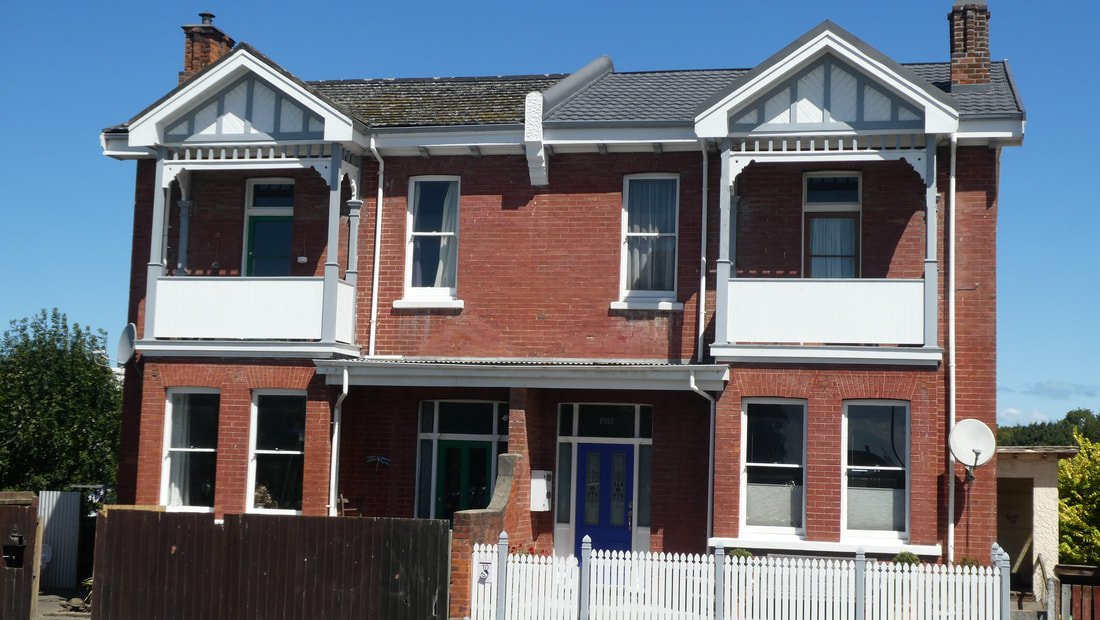
I was lucky enough recently to have a look around an historic Timaru blue stone residence that has been presented for sale on the local property market. 

Situated just off Claremont Road, it sits on a back section and has a sunny open aspect. It is private and peaceful, nestled in amongst the neighbouring sections and is surrounded by the sounds of native bird call that drift up from our wonderful Centennial Park.
The cottage was built by David Fyfe in the 1860’s and overlooks the site of his quarry near where the northern branch of the Otipua Stream flows into the Scenic Reserve.

The Fyfe family were from Dundee in Scotland and David brought with him some impressive masonry skills, he became a great proponent of building in our local basalt. 

The original cottage, of standard rectangular form, was constructed out of bluestone quarried from the Scenic Reserve by Fyfe. The bluestone walls are in great condition and it is still, in part, a rare surviving example of early settler architecture in New Zealand.
Upon close inspection, you can see where the cottage's original roof line was and where it has been extended over the years. Alterations have been carried out to enhance its liveability, but it still preserves some of its historic charm.

David Fyfe operated private quarries in the Gleniti area, extracting our distinctive Timaru bluestone, basalt, for use in local buildings, bridges and infrastructure, contributing to Timaru’s unique architectural character. The park was also the site of several quarries owned by the Timaru Harbour Board. 

Our bluestone reserves are plentiful and come from lava that flowed down to the shore of Timaru from Waipouri Mt Horrible 2.5 million years ago. They make for a remarkable building material and solid foundation for our town to sit atop.

The Otipua Creek area was then a rural locality, also known as Beaconsfield. It was settled by European immigrants in the 1870’s and became a thriving village. It has gradually been encompassed into the suburb of Gleniti in the Timaru Township.

Another nearby small building of note is the Dynamite storage shed that sits within a quarried area along Otipua Stream on the other side of Claremont Road. The use of dynamite was essential for breaking apart the hard basalt found throughout the quarry. The shed was in close walking distance but kept the explosives secure and isolated from the main worksite and residence.

It is also made of stone and built to be fireproof and blast-resistant. It’s remote placement and thick walls reflect the sensible safety practices of the time.
​
You can follow David Fyfe’s fascinating journey to New Zealand on the Wuhoo Timaru page under Wuhoo Timaru Fyfe House.  

Karen Rolleston


Mr Fyfe is survived by his widow, two daughters and three sons. The Misses M. D. and J. Fyfe live with their mother at Glen-iti. The sons are Mr D. J. Fyfe, Wellington; C. Fyfe, Christchurch; and W. Fyfe, Wairarapa." 
0 Comments

Telephone exchange

11/10/2025

0 Comments

 
Picture
The 1957 telephone exchange building in Timaru’s CBD. Photo Andrew Paul Wood 
Andrew Paul Wood

​In the heart of Timaru’s CBD, the 1957 telephone exchange building still commands attention with precision, proportion, and understated confidence.

Designed by Christchurch architect Stewart Minson, the structure occupies a tapered site with crisp detailing and sheltered forecourt offering both utility and civic dignity.

Minson, along with Sir Miles Warren, Peter Bevan, Paul Pascoe, and others, was one of the architects responsible for Christchurch’s distinctive mid-century modernism.

The exchange’s north façade’s generous glazing, typical of early modernist optimism, invited sunlight and, inevitably, heat. The solution? A brise-soleil: a concrete sun screen that became a signature of pioneering modernists like Le Corbusier.

It’s a technical flourish that speaks to the building’s dual identity: functional infrastructure and public architecture.

But it’s the east wall that elevates the exchange into cultural landmark.

There, Russell Clark’s sculptural abstract ear, remains one of Timaru’s most distinctive public artworks.

Commissioned by Minson, Clark’s piece gestures toward the invisible networks of sound and signal that were beginning to reshape the world, a gesture to the building’s essential function.

The Aigantighe Art Gallery and Chorus restored the sculpture in 2010.

Featured in Julia Gatley’s Long Live the Modern: New Zealand’s New Architecture 1904-1984 (2008), the exchange is one of Timaru’s few nationally recognised Modernist masterpieces.

It’s far from just being an anonymous box, it’s a reminder that even utility buildings can carry civic meaning, artistic ambition, and architectural integrity.
0 Comments

Arowhenua Reserve Gateway

18/9/2025

0 Comments

 
Something I see flash by every time I head north into Temuka is the interesting looking cream archway on the Northern corner of Huirapa St and the Timaru-Temuka Highway.  On my last trip I decided to stop and check it out.
It is known as The Ratana War Memorial and was erected at the entrance to a reserve at Arowhenua by members of the Ratana movement in memory of the South Island Maori who fell in the 1914-1918 war.  Several plaques have been added over the years as further memorials.
This arched gateway is decorated with moulded motifs and images which are done in the style of a traditional whakaiho carved wooden entranceway. 
These images and mouldings of the Star of David, mere, taiaha and natural designs associated with the Ratana movement.
It consists of a gabled ‘bargeboard’ arch with a carved figure at the apex and short columns on the sides.
What makes this example unique however is that it is carved from Oamaru stone rather than wood.
Work began with the clearing of the site in early 1934 with the carving work to be done by Maori craftsmen from the North Island. 
There were a few recorded delays and setbacks on the way to unveiling the gateway. Ratana and his Roopu (party of 68 members) arrived on November 12th for the ceremony but rain delayed events till the following day. On the 13th November 1935 the weather cleared, the Morehu Silver Brass Band played, Ratana delivered his speech, hymns were sung and the gateway was unveiled.
I was surprised to see it has no Historic Places Trust listing at this stage. Records are held of the Memorial and Ratana’s speech at the Timaru Library, in the archives Built Heritage Inventory.
The arch faces the Holy Trinity Church across Huirapa St and is well worth a look. The carvings, mouldings and inscriptions are weathered but have been painted to help retain their integrity and it is substantially intact. 
It is quite peaceful given its busy location and the reserve it leads to is a pleasing place to be. It’s a unique and beautiful memorial.
Karen Rolleston
0 Comments

Kapua Moa Site, Waimate Gorge

18/9/2025

0 Comments

 
Picture
This site is located 8km South West of Waimate. Heading through the gorge you turn onto Kapua Road and you’ll find an information panel detailing the area of an interesting historic discovery in the 19th century.
The land owner in 1894, Mr T A MacDonald, discovered a large cache of Moa bones while clearing a spring hole for water supply to his farm. The find was reported in the Newspaper and the article caught the eye of Professor Frederick Hutton, then curator of the Canterbury Museum. He paid Mac Donald twenty pounds to excavate the site and also sent a taxidermist, Mr W Sparkes, to oversee the dig.
The resulting dig revealed the largest and most varied collection of moa bones ever obtained from one place. During these excavations up to seven railway wagons of bones were taken away, with estimates that 2.5 million bones were removed. A mixture of bones from 6 Moa species was recovered.
The site of the find was on a plain some 3 miles long by 1 mile wide that sat in the basin of a former lake.  When European settlers first arrived in the area there was still a small pond which was later drained and this is the area where the bones were discovered.
Moa roamed throughout many habitats, ranging from open shrub land and riverine grassland to dense forest and at altitudes from sea level to subalpine. Before Moa became extinct this location was a bountiful feeding area dotted with spring holes connected to ground water supplies.
Many of these springs were covered by vegetation and the most likely scenario is that, over the course of generations, a number of unfortunate moa became bogged in these holes and were unable to lever themselves out. Naturally death followed and as the birds decomposed their bones would fall down the holes. The bones at Kapua have been dated from 1014-714BC.
Looking at the peaceful farm land that lies there today is it incredible to think that it was once the grazing grounds for these amazing birds.
Waimate Museum has more information and photos available including footage of a later 1984 excavation that was carried out.
There is also a fascinating Frank Film called Remembering Moa that details the history of Moa in the area, this can be viewed online if you are interested.
Karen Rolleston
0 Comments

War Memorial, Cave.

18/9/2025

0 Comments

 
Picture
Driving South after Anzac weekend I was touched to see the many small crosses set up near war memorials in our provincial townships. They present such a focal point for our communities to gather at, show our respects for and to remember the names of the many people in our districts who went to fight in wars in distant lands.

South Canterbury is no different from anywhere else in New Zealand in that we have our share of war memorials to commemorate the men and women lost to our communities. By the end of 1918 over 1000 South Cantabrians had been killed. In the following years many others would die as a result of their wounds. Each death sent out deep waves of grief and loss throughout the community.

On the roadside above the township of Cave sits a war memorial, a large basalt rock with a poetic inscription on the front that reads…'So long as the rocks endure and grass grows and water runs will this stone bear witness that through this low pass in the hills, men from the Cave, Cannington and Moutakaika Districts rode and walked on their way to the Great European War 1914-1918.’

This memorial was commissioned by Thomas Burnett MP, owner of Mount Cook Station from 1903 to 1941. It was erected on the site following World War 1. He personally drafted the inscription and his notes still exist along with other memoriabilia relating to the Memorial. Another inscription was later added after the losses in the 2nd World War.

As well as this war memorial Thomas Burnett and the Burnett Valley farms also commissioned the building of Cave’s beautiful St David’s Pioneer Memorial Church in 1930 along with several others to commemorate the achievements of the European settlers and pioneers of the region.

Returning veterans of the war formed the New Zealand Returned Soldiers’ Association (RSA) three days after the first Anzac Day in 1916 to focus on the needs of former soldiers. Locally the South Canterbury RSA was founded in May 1916 and by 1919 RSAs had also been formed at Temuka, Waimate and Geraldine.

How lucky we are to be able to celebrate another peaceful Anzac weekend in our corner of the world.

Lest we forget.

Karen Rolleston
0 Comments

Taiko School Site, Rosewill Settlement

18/9/2025

0 Comments

 
Picture
​This old building sits on a corner of the road opposite the Taiko war memorial at the junction of Taiko Hall Rd and Sutherlands Rd.

Following land reform legislation in 1892 the Levels Estate was split into over 200 small farms and sections, the district was named Rosewill Settlement. An influx of families successful in the 1904 ballot meant a school was required to service the area.

A 4.5 acre block, which had been donated by a local farmer, Mr J. Armstrong, was decided to be the ideal location.

The Department of Education used their then standard design for a 1 teacher classroom which was fairly basic but fulfilled the requirements of the day. The local school opened in May 1906 with a role of 22 children headed by Miss Honora Crowley. It continued to run for the next 42 years with the annual roll fluctuating between 12 and 30 pupils, 250 pupils and 13 teachers in total over its 42 years of operation.

The School Board of 5 local residents oversaw the running of the school that provided a curriculum of arithmetic, English, geography, history and domestic skills. Older pupils were harnessed into assisting with school maintenance and as helpers in the classroom.

The building also served as a centre for the community with meetings, services, social, cultural and sporting events being held here. The school grounds boasted a rifle range and tennis court.

Fundraising events including dances, card evenings and working bees helped to keep the building and grounds in good condition.

Eventually the costs of running these small sole charge schools became prohibitive and this coincided with improvements in roading and transport services so in 1948 the school closed and amalgamated with the Pleasant Point District High School as did many other small local country schools.

This did not mean the end for the building which became the Community Hall and in 1957 it was legally gazetted as a Hall site. After ongoing modifications and renovations it is still locally managed and serves as a social centre for the Taiko community.

Most of this information came from the information board on the roadside outside the gates of the hall, this was unveiled in a small ceremony on the 8th December 2020, an event attended by around 60 local people including some past pupils.

Karen Rolleston
Picture
Picture
Picture
0 Comments

Gleniti Golf Club Clubhouse

18/9/2025

0 Comments

 
In 1964 the property, Otiritiri, owned by Mr K Burns and situated at the end of Pages Road became available for sale. He was keen to see the property remain whole and not be broken up into smaller sections.

The original large brick two-storied Homestead and cottage were set upon 35 acres of beautifully landscaped gardens on the outskirts of Timaru.  Mr Burns was an enthusiastic and expert gardener who opened his property yearly to the public to visit and enjoy during daffodil season.

The existing Gleniti Golf course sat across the road and was then a 12 hole course, the club were keen to increase their grounds to allow for a full 18 holes.

The idea of buying the property was discussed at a special meeting, called for by Les Darling. And a purchase price of 18,000 pounds was approved. Mr Burns offered to leave in some money at a very low rate and the deal was sealed on October 8th 1964.

Much fundraising was done with raffles and debentures.  Daffodil bulbs at the Pages Road boundary were lifted and sold at a good profit and the trees along the north face were also sold off to be milled at a later date.

The Homestead was ideal as a clubhouse and did not require a great deal of alteration.

The kitchen, toilets and bar were upgraded. The maid’s staircase was removed from where the Ladies Room is now situated.

After golf, the balcony was a favourite place to sit as it was shaded by trees and I understand an upstairs lounge was considered but did not proceed, as the stairs, after a few beers were consumed, were considered hazardous.

Then the main entrance was via Pages Road, past the cottage, through the poplars to the house however this was considered too expensive to maintain so access was opened up from the side road, Oakwood Road. This is where the current carpark is today located on the site of the old Orchard.

Opening Day arrived- May 23 rd 1965, Gray Cup Day. This was when the first official match and opening were held on the new 18 hole course with Mr M Holden, then president, in charge.

I am sure Mr Burns would be delighted to see his old home and grounds, long after he sold it, still intact, well used and appreciated by another generation of golf playing Timaruvians,

Karen Rolleston
0 Comments

The Old New Timaru Herald building, Bank St

18/9/2025

0 Comments

 
Picture
The Timaru Herald began life in Sam Williams’ kitchen in a small cottage on lower George St on June 11th, 1864.  A once weekly edition for the settlers when our then mostly unsettled and only partially developed district was just getting started. This was only a temporary arrangement and the press and cases of type were soon transferred to a building in another part of George St.
Over the course of its history it has moved location several times, spending its longest period, some 99 years, in Sophia Street. Eventually the Herald ran out of space and a new building was needed.
Situated on Bank Street you can see the interesting modern building that became the 6th home for the Timaru Herald.
The brief given to the building designer was that it had to complement the city library while also adding depth and distinctive shape to a conventional existing structure. It was the biggest commercial contract Barrie Walsh Design Ltd had undertaken in the then 7 years he had been in business in Timaru.
The existing structure, the site of a former sock and clothing factory, was a fairly standard two storey, gable ended rectangular building and the designer had to work within the constrictions of the walls, heights and internal fittings. Mr Walsh worked in close consultation with structural engineer, Mr Ralph Littler, and numerous engineering design features were embodied into the distinctive façade they created.
Mr Walsh said that the basic idea for the exterior design came quickly enough but took some time to refine. Originally the tower structures were to be a solid pour of concrete but this method was ruled out and, with the assistance of other local contractors, precast concrete panels were lifted into position by crane on pre-assembled steel frames.
The new $1 million dollar building was opened by PM Rob Muldoon. The Timaru Herald printed a souvenir supplement to celebrate the opening of the new premises on 30th March 1984.
How times have changed in the newspaper business. When the new building was completed it contained floors full of spacious offices for editorial and managerial staff, graphics art and advertising departments, camera suites, fax transmission room, typesetter’s room and a visual display area as well as board room, foyer, lift large circular stairwell, canteen and staff bathrooms. By the late 80s the Herald had two printing presses producing several newspapers for the whole of the South Island. A far cry from its humble beginnings in Sam Williams’s cottage.
However, 28 years after moving into the Bank St building the rapidly changing world of newspaper production meant that the site was far too big and so the Herald was on the move again, to its current leased site on Sophia St.

Karen Rolleston
0 Comments

Former Temuka Library

9/8/2025

0 Comments

 
​Andrew Paul Wood
​Temuka’s King St is regarded as one of the best-preserved small town Edwardian main streets in the country but also includes a number of architectural treasures dating from the 1870s to early 20th Century.

These include Martin’s Store (1872), one of the oldest Victorian commercial buildings in town; Mendelson’s Building (1900); the Empire Hotel (1913) and Temuka Hotel (1919), advertising the town’s commercial confidence.

Temuka emerged as a key service town for sheep and dairy farming in the 19th century, strategically positioned near fords on the Ōpihi and Temuka rivers.

It also became a secondary industrial centre to Timaru with a tannery, flour mill, cheese factory, and the famous Temuka Pottery.

A later addition to King St is the former Temuka Library (1927). Designed by the Timaru firm Turnbull and Rule, it exemplifies restrained neoclassical style, with rusticated pilasters and a pedimented entrance.

Commissioned by the Temuka Mechanics’ Institute, a £500 donation from local MP T.D. Burnett and contributions from the Borough and County Councils, the Plunket Society, and the Women’s Christian Temperance Union, saw the new building was constructed on the site of the original 1873 wooden library.

A model of interwar civic planning, it included a public reading room, lending library with a librarian’s residence, Plunket Rooms and Ladies’ Rest Room, reflecting the era’s emphasis on maternal and social welfare.

The library served the community until the 1990s, after which it was repurposed as a restaurant and later a private residence.

It remains a dignified reminder of Temuka’s civic pride and prosperous past.
0 Comments

Trees in town

2/8/2025

0 Comments

 
Picture
David McBride
​The landscapes of New Zealand are embroidered with trees.

Our native forests comprise complex ecosystems of trees, shrubs and birdlife.

In addition, our forestry industry has sourced conifer species from North America. In particular the west coast of the USA and Canada have been the sources of species such as the pinus radiata and cypress that have flourished here.

In both cases – native and introduced – the visual amenity is often enhanced by the sheer breadth and density of the forests. Turning to towns and cities, trees serve a different purpose.

This is not a matter of density, it is the colour and forms of trees that are on display.

The tree specimens used to enhance the built environment of town centres are likely to be of European origin, with a history in this role of softening any built environment from tarseal and concrete.

The photograph here shows the intricate tracery of such trees in winter, located at Alexandra Sq in central Timaru.

The exact species is disguised in winter, given the absence of leaves during a harsh winter with frosts.

However, the visual enhancement of the trees does remain, awaiting the joys of spring, ready to unfold.
0 Comments
<<Previous
    Back to Articles

    View by date

    Archives

    May 2026
    April 2026
    March 2026
    February 2026
    December 2025
    November 2025
    October 2025
    September 2025
    August 2025
    July 2025
    June 2025
    May 2025
    April 2025
    March 2025
    February 2025
    December 2024
    September 2024
    July 2024
    May 2024
    July 2023
    February 2021
    March 2020
    February 2020
    January 2020
    December 2019
    November 2019
    October 2019
    September 2019
    August 2019
    July 2019
    October 2018
    September 2018
    July 2018
    June 2018
    May 2018
    April 2018
    March 2018
    November 2017
    October 2017
    August 2017
    July 2017
    June 2017
    May 2017
    April 2017
    March 2017
    February 2017
    January 2017
    December 2016
    November 2016
    October 2016
    September 2016
    August 2016
    July 2016
    June 2016
    May 2016
    April 2016
    March 2016
    February 2016
    January 2016
    December 2015
    November 2015

    Categories

    All
    Featured Articles

Picture
CONTACT
​Timaru Civic Trust

39 George Street, Timaru, 7940, New Zealand
Email [email protected]
Become A Member
Picture
Picture

© Timaru Civic Trust | Imagery supplied by Brian High Productions ©
  • Home
  • About Us
    • What we do
    • Meet the Team
    • Save the Date
    • Newsletters
    • HIstory of Timaru Civic Trust
  • Featured Articles
  • Heritage & History
    • Heritage NZ Listed Category 1
    • Awards & Grants
  • Get involved
    • Become a member
    • Make a donation chasing coin
  • Street Art
  • Blog
  • Blue Plaques
  • Contact
    • Links
    • Facebook Page
  • Ho